The 2018 BC Building Code, referencing CSA A23.3 and the province's strict geotechnical site regulation, mandates quantitative compaction verification for engineered fills in Langley. This is not a guideline; it is a prerequisite for occupancy permits. The sand cone method, governed by ASTM D1556-15, remains the most defensible field density test in this region because it provides a direct physical measurement of in-place density, independent of the moisture-related interference that plagues nuclear gauges in the Fraser Valley's silty-clay tills. Langley's glacial geology, with its complex stratigraphy of Vashon till and post-glacial Fort Langley silts, requires testing protocols that account for particle size variability and moisture retention, making the sand cone method particularly suited for proctor tests correlation and regulatory submission packages. Our laboratory, operating under ISO 17025 accreditation, executes these tests to generate compliance data that withstands scrutiny from municipal engineers and geotechnical reviewers across Township of Langley and City of Langley projects.
Direct density measurement via ASTM D1556 eliminates the moisture and chemistry biases that compromise indirect methods in Langley's variable glacial soils.
Method and coverage
Regional considerations
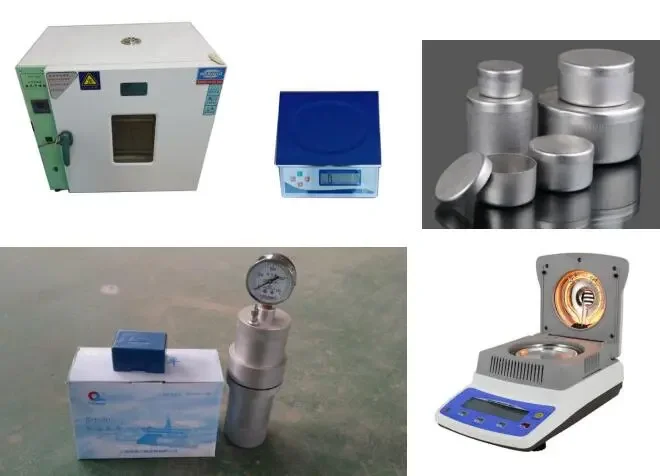
A sand cone density test kit, with its calibrated one-gallon jar, base plate, and precision-machined cone valve, appears rudimentary, but its successful execution in Langley's winter conditions demands procedural discipline. The primary failure mode on site is vibration transferred from nearby compaction equipment, which artificially densifies the calibration sand inside the excavated hole before the valve closes. This yields a falsely low excavated volume and a grossly inflated density reading. A second risk arises from moisture migration: when testing in the silty-clay tills prevalent across the Langley uplands, a small delay in transferring the excavated soil to a sealed container can result in a 2-3% moisture loss, skewing the dry density calculation. The most consequential error involves oversized particles. The Fraser Valley glaciofluvial deposits often contain cobbles exceeding the 50 mm limit of the standard test; if a cobble is dislodged during excavation, the irregular hole geometry invalidates the sand-volume measurement. The engineer's field log must immediately flag such a test as non-representative, and a replacement test must be offset by at least 300 mm.
Standards that apply
ASTM D1556 / D1556M-15e1: Standard Test Method for Density and Unit Weight of Soil in Place by Sand-Cone Method, ASTM D698-12e2: Standard Test Methods for Laboratory Compaction Characteristics of Soil Using Standard Effort, CSA A23.3-14: Design of Concrete Structures (referenced for fill acceptance criteria under footings), BC Building Code 2018, Division B, Part 4 (Structural Design) and Part 9 (Housing and Small Buildings)
Complementary services
Standard Proctor Compaction Testing
Establishes the moisture-density relationship (ASTM D698) for fill soils sourced from Langley pits. The Proctor maximum dry density is the denominator in the percent compaction calculation derived from the field sand cone test.
Nuclear Gauge Density Correlation
Develops a site-specific calibration between the nuclear gauge and the sand cone method, enabling faster production testing across large Langley subdivision pads while maintaining a defensible audit trail tied to ASTM D1556.
Atterberg Limits and Grain Size Analysis
Classifies the fill material's plasticity and gradation. Silts from the Fort Langley Formation, for instance, require careful moisture conditioning, and their classification dictates whether standard or modified Proctor energy is appropriate.
Typical parameters
Top questions
How many sand cone tests does the Township of Langley typically require for a single-family home foundation pad?
The Township of Langley engineering department typically requires a minimum of one field density test per 500 square meters of compacted fill area per lift, with a minimum of one test per lift for pads smaller than 500 m². The final number is dictated by the geotechnical engineer's site-specific quality assurance plan, which must be submitted with the building permit application. For a standard residential pad with 3 lifts of imported structural fill, this usually translates to 3–4 tests, though additional tests may be ordered if initial results fall below 98% of the standard Proctor maximum dry density.
Why can't a nuclear density gauge always replace the sand cone method in Langley's soils?
Nuclear gauges measure density indirectly via gamma radiation attenuation, which is sensitive to the chemical composition and moisture heterogeneity of the soil. In Langley's glacial tills, the presence of iron-rich minerals and erratic cobbles can introduce a systematic bias of up to 5 pcf in the wet density reading. Additionally, Transport Canada and local municipal regulations require a radioactive materials license, secure overnight storage, and formal radiation safety protocols. The sand cone method, being a direct physical measurement, serves as the primary reference standard and is the required referee method when nuclear gauge results are disputed or when the moisture content exceeds 25%.
What is the cost of a field density test using the sand cone method in Langley?
The fee for a single field density test using the sand cone method in Langley, including the technician's time, calibration sand, and the formal signed report with percent compaction calculation, typically falls between CA$150 and CA$210. The exact cost depends on the number of tests scheduled per mobilization, the site's distance from our equipment staging area, and whether a companion laboratory moisture content determination (ASTM D2216 oven-dry method) is required immediately or can be batched with other samples.