Our Langley laboratory category covers the physical characterization of soils and aggregates, directly supporting geotechnical investigations across the Fraser Valley. Local glacial till, marine clays, and alluvial deposits demand precise index testing to predict behavior under load. We follow ASTM and CSA standards, including CSA A23.2 for concrete aggregates, ensuring reliable data for foundation design and earthworks. Key procedures include grain size analysis (sieve + hydrometer) to define particle distribution and Atterberg limits to assess plasticity and moisture sensitivity of fine-grained soils.
These tests are essential for residential subdivisions, commercial developments, and infrastructure projects in Langley, where shrink-swell clays and variable fill materials require thorough classification. The results inform slope stability assessments, retaining wall design, and pavement subgrade evaluations. For a complete profile, our Atterberg limits testing integrates directly with moisture-density relationships and strength parameters, giving engineers the full picture needed for safe, compliant construction.
Geotechnical laboratory testing forms the analytical backbone of any site characterization in Langley, where the complex glacial and post-glacial geology demands precise material classification. The region is underlain by advanced glacial till, glaciomarine sediments, and alluvial deposits of the Fraser River system, creating highly variable subsurface conditions. A robust laboratory program quantifies index properties, strength, compressibility, and hydraulic conductivity to support foundation design, slope stability assessments, and seismic evaluations. These services directly complement field programs such as geotechnical investigation and CPT (Cone Penetration Test) profiling, bridging the gap between in-situ observations and engineering parameters required for analysis under the BC Building Code and relevant CSA standards.
All testing procedures adhere to standardized Canadian methodologies, primarily those published by the Canadian Standards Association (CSA) and ASTM International, ensuring defensible, repeatable results. Classification testing follows the Unified Soil Classification System (USCS) and includes grain size analysis (sieve + hydrometer) to define the full particle-size distribution from coarse gravel to clay fraction. Fine-grained soil behavior is further characterized through Atterberg limits testing to determine liquid and plastic limits, which are critical for assessing plasticity, swell potential, and drained/undrained strength trends. Advanced testing such as consolidated-undrained triaxial compression with pore pressure measurement and one-dimensional consolidation tests are conducted in general accordance with CSA A23 and relevant ASTM procedures, providing the effective stress parameters and compressibility indices needed for settlement and stability calculations in Langley’s sensitive clay and till units.
Typical project profiles in Langley range from single-family residential subdivisions on gently sloping upland till to multi-storey mixed-use developments and industrial warehouses situated over low-lying floodplain soils. In the Willoughby and Murrayville areas, laboratory data routinely informs shallow footing and slab-on-grade designs, while projects near the Nicomekl River floodplain often require deep foundation alternatives due to the presence of soft, compressible clays. For these challenging profiles, laboratory-derived undrained shear strengths and consolidation parameters are indispensable for designing driven piles or cast-in-place concrete foundations that meet both serviceability and ultimate limit state criteria. Infrastructure projects, including road widenings and utility corridors, rely on compaction characteristics from standard Proctor testing and permeability data to prepare subgrade specifications and drainage designs consistent with MMCD and municipal requirements.
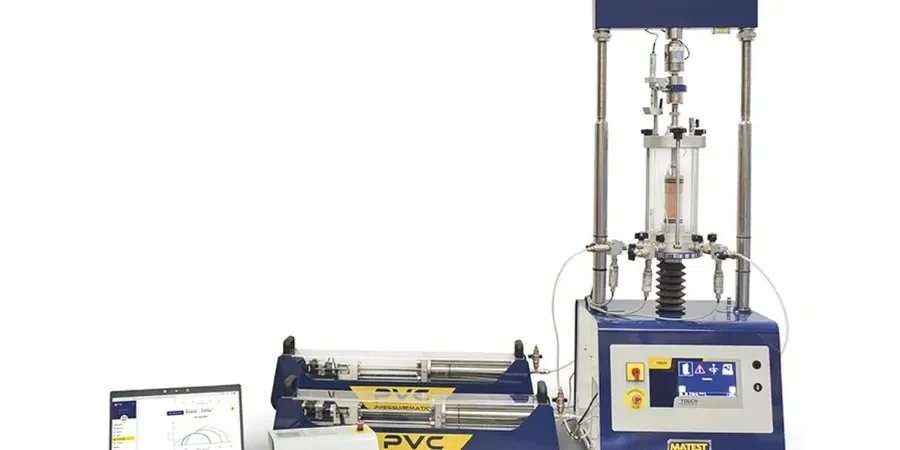
The laboratory workflow begins with careful sample extrusion, logging, and selection of test specimens by experienced technicians, followed by the execution of the prescribed testing suite and rigorous data reduction. Results are compiled into a clear, concise geotechnical data report or integrated into the broader interpretive report, complete with graphical plots of gradation curves, consolidation curves, and Mohr-Coulomb failure envelopes. This analytical output empowers structural and civil engineers to move forward with calibrated design parameters, reducing uncertainty and mitigating the risk of overconservatism or underperformance. By combining local geological insight with accredited laboratory capabilities, we deliver a high-value dataset that transforms raw soil and rock samples into the engineering foundation for safe, cost-effective construction across Langley Township and the City of Langley.