Road geotechnics in Langley addresses the interaction between pavement structures and the area’s variable glacial till, marine clay, and alluvial soils. Proper subgrade evaluation and structural design are essential under the BC Supplement to TAC’s Geometric Design Guide and MMCD standards. Our approach integrates site-specific CBR analysis to characterize bearing capacity and support selection between [flexible pavement design](flexible-pavement) and [rigid pavement design](rigid-pavement) solutions tailored to local drainage and frost conditions.
This expertise is critical for arterial upgrades, industrial access roads, and residential subdivisions where soft ground or high water tables demand engineered stabilization. A detailed [CBR study for road design](cbr-road) informs pavement thickness and material specifications, reducing long-term deformation risks. Whether extending 200 Street corridors or servicing new developments near the Fraser River floodplain, geotechnical input ensures durable, compliant road performance.
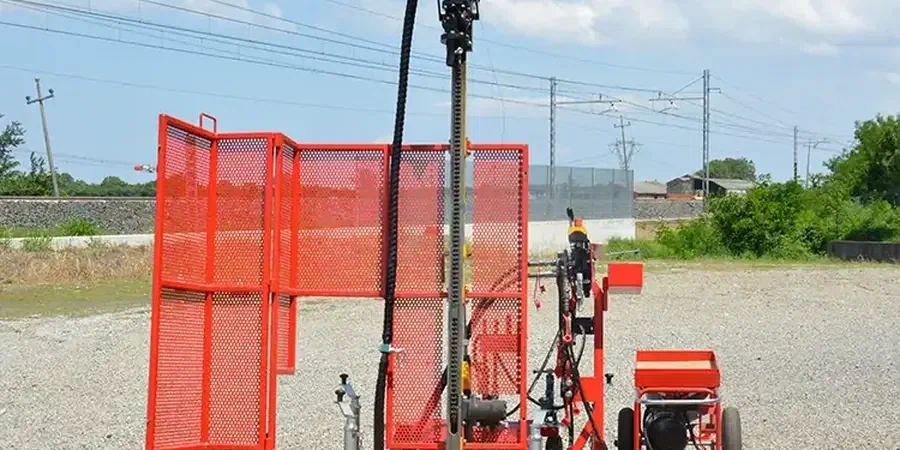
Road geotechnics in Langley integrates subsurface assessment with pavement design to address the challenges of local geology, which includes glacial till, marine clay, and alluvial deposits along the Fraser River lowlands. The performance of any roadway depends on understanding how these soils behave under repeated traffic loading and seasonal moisture fluctuations. Our work begins with a thorough geotechnical investigation to characterize stratigraphy and identify weak or compressible layers, guided by the BC Ministry of Transportation and Infrastructure (MOTI) standards and the Canadian Foundation Engineering Manual. For projects near the Nicomekl River or across the Langley-Surrey boundary, we also apply the City of Langley’s Subdivision and Development Servicing Bylaw, ensuring compliance with local requirements for subgrade preparation and drainage.
Our field methodology follows CSA and ASTM standards adapted for Canadian conditions, with a strong emphasis on quantitative in-situ data. We routinely deploy the Cone Penetration Test (CPT) to obtain continuous profiles of tip resistance, sleeve friction, and pore pressure, which are essential for estimating subgrade modulus and identifying soft clay lenses that could lead to differential settlement. This is complemented by In-Situ such as the field density test using the sand cone method to verify compaction levels against MOTI specifications during construction. All data collection follows ASTM D5778 for CPT and ASTM D1556 for sand cone testing, providing legally defensible results for municipal and provincial road projects.
Typical Langley projects range from arterial road widenings along 200th Street to residential subdivision roads in Willoughby and industrial access routes in Gloucester. Each requires a unique adaptation of geotechnical parameters. In clay-rich areas, we focus on consolidation settlement and the need for preloading or lightweight fill, while in sandy zones near former glacial outwash channels, subgrade stabilization may rely on mechanical reinforcement. Our laboratory testing program quantifies these design parameters through grain size analysis by combined sieve and hydrometer to classify soils per the USCS, and Atterberg limits testing to determine plasticity characteristics that influence shrink-swell potential and frost susceptibility under local climate conditions.
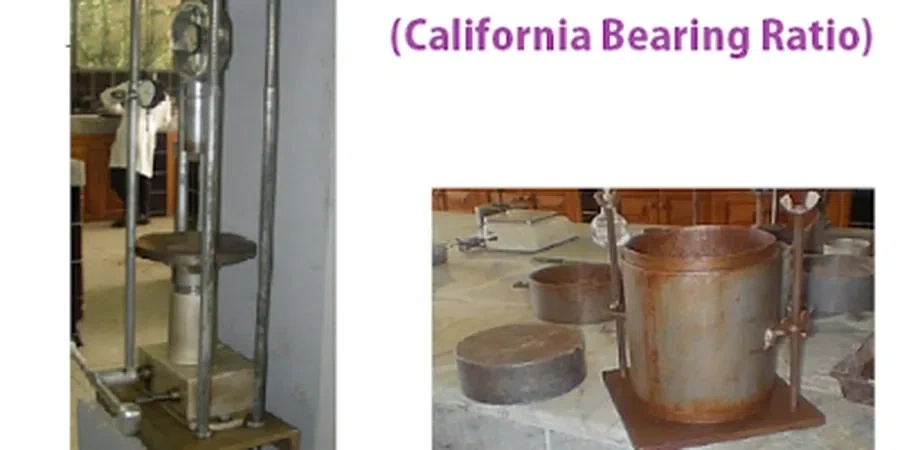
We deliver a structured process from initial site reconnaissance to final reporting, producing pavement design recommendations that include subgrade improvement, base course thickness, and drainage provisions. The final package provides clear, actionable parameters for structural design and earthworks, directly supporting foundations for associated infrastructure like curbs, catch basins, and light standards. Our value lies in reducing long-term maintenance costs by matching the geotechnical solution to the actual ground conditions, avoiding overdesign in competent soils and mitigating risks in problematic areas, all while keeping your project on schedule and compliant with Langley's regulatory framework.