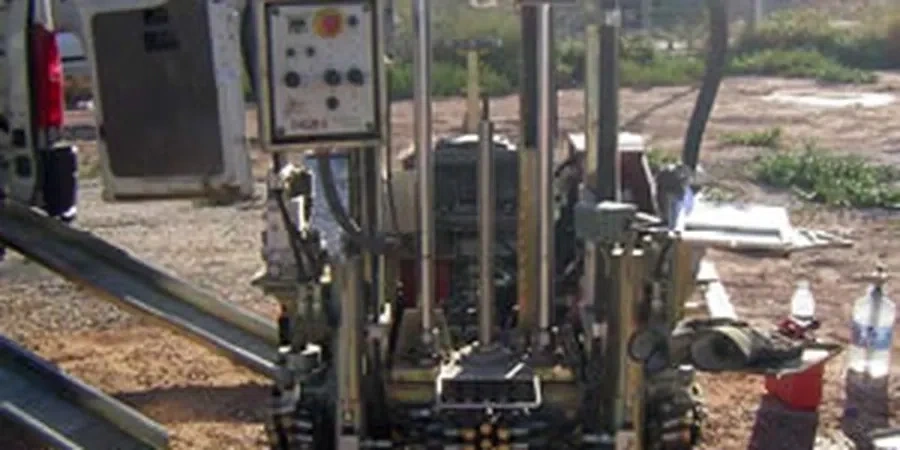
When we review site investigation data from across the Township of Langley, one pattern keeps surfacing: the local soil profile rarely matches what the regional geology maps suggest. Between the glacial till uplands near Brookswood and the compressible alluvial clays along the Nicomekl floodplain, the bearing layers can shift from dense sand to soft silt within a single property. A conventional drill and split-spoon approach often misses these transitions because the sample disturbance masks the true in-situ behavior. For our field crews, the CPT rig — pushed at a constant 2 cm/s — becomes the primary tool to read the ground without smearing the evidence. We correlate the tip resistance and sleeve friction directly with soil classification charts that we calibrate against local Fraser Valley deposits, so the client gets a continuous profile rather than a five-foot interval guess.
A continuous CPT log eliminates the blind spots between split-spoon intervals — in Langley’s erratic glacial-fluvial deposits, those blind spots are where the trouble hides.
Method and coverage
Regional considerations
A few years back, a tilt-up warehouse near the 200th Street industrial corridor was designed with an allowable bearing pressure derived from a single test pit. Within eighteen months, differential settlement cracked the slab at the truck well — the culprit turned out to be a buried peat pocket that the pit missed by three meters. When we later pushed a CPT line across the same pad, the sleeve friction ratio spiked right where the organics sat, mapping the soft zone in real time. The Township’s surficial geology includes discontinuous lenses of post-glacial organic silt, especially south of the Nicomekl River. Running a piezocone profile before finalizing the foundation elevation costs a fraction of repairing a tilted floor, and it gives the geotechnical engineer the pore pressure data needed to estimate consolidation time under the planned fill load.
Standards that apply
ASTM D5778-21: Standard Test Method for Electronic Friction Cone and Piezocone Penetration Testing of Soils, NBCC 2020: National Building Code of Canada — seismic provisions applicable to Langley (Site Class determination via Vs or CPT), NCEER Guidelines (Youd et al., 2001): Liquefaction resistance from CPT data, Robertson & Cabal (2015): Guide to Cone Penetration Testing (6th ed.), CSA A23.3: Design of concrete structures — foundation references
Complementary services
Piezocone Penetration Test (CPTu)
The full seismic piezocone push, measuring tip resistance, sleeve friction, and dynamic pore water pressure. We use a saturated filter element to capture u2 response, which is critical for identifying thin silt seams within sand units that would otherwise go undetected. The dissipation tests at target depths give the coefficient of consolidation directly — data that a standard SPT cannot provide.
Seismic CPT (SCPT)
A downhole shear wave velocity measurement integrated into the cone push. At one-meter intervals, a shear beam at the surface generates a signal recorded by a geophone behind the cone tip. The resulting Vs profile is used for NBCC Site Class determination and liquefaction triggering analysis following the Boulanger & Idriss procedure, giving the structural engineer a defensible stiffness parameter without a separate crosshole survey.
Typical parameters
Top questions
What does a CPT test cost for a single-family lot in Langley?
For a standard residential lot in Langley Township, a single CPT sounding to 15–20 meters depth typically ranges from CA$220 to CA$380, depending on access conditions and whether piezocone or seismic cone is required. The price includes the mobilization within the Metro Vancouver area, the raw data file, and the interpreted log with soil behavior type classification.
Can the CPT rig work on the compact glacial till common in Brookswood and Fernridge?
The dense Vashon till that caps much of South Langley can reach cone tip resistances above 30 MPa. Our 20-ton push capacity handles most of these profiles, but when refusal occurs before target depth, we recommend pairing the CPT with a rotary drill setup to core the till. The CPT data up to refusal still provides valuable continuous stratigraphy for the overlying sand and silt units.
How do you interpret CPT data for the soft clays near the Nicomekl River?
In the low-lying floodplain areas, the corrected tip resistance often drops below 0.5 MPa within the marine and lacustrine clays. We use the normalized soil behavior type chart (SBTn) with the pore pressure ratio Bq to separate organic silts from inorganic clays, then apply consolidation settlement calculations based on the constrained modulus derived from the net tip resistance. Dissipation tests at multiple depths help estimate the time rate of settlement under fill.