In Langley, seismic geotechnical services address the risk posed by regional crustal, subcrustal, and Cascadia subduction zone earthquakes on local glacial and post-glacial soils. Our work integrates the seismic hazard values defined by the National Building Code of Canada (NBC 2020) for British Columbia. A critical focus is soil liquefaction analysis, evaluating susceptible loose sands and silts in the Fort Langley aquifer and floodplain deposits. We also advance performance-based design through base isolation seismic design, adapting structural periods to the site-specific spectra.
These investigations are mandatory for high-occupancy institutional buildings, essential infrastructure, and industrial facilities governed by BC’s geotechnical seismic requirements. For valley-wide planning, seismic microzonation maps hazard variability across Langley’s till uplands and lowland basins, directly informing foundation decisions and structural ductility demands under code-level shaking.
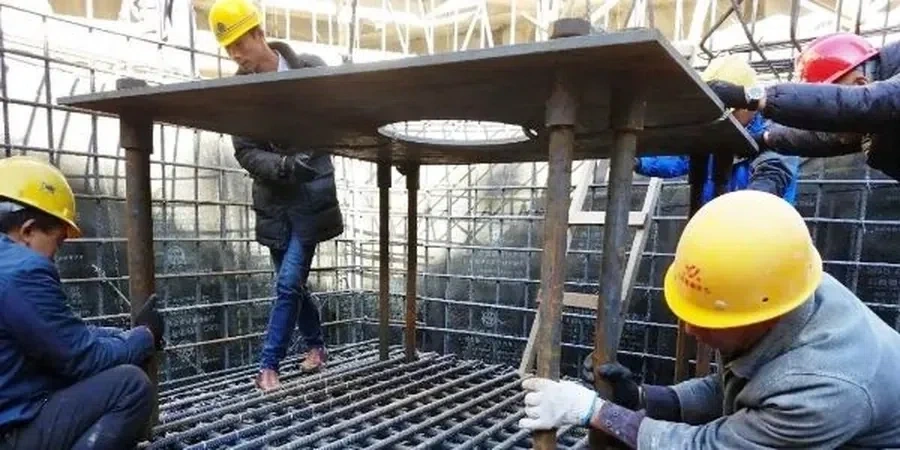
Seismic site assessment in Langley addresses the evaluation of ground behavior under earthquake loading, driven by the region’s position within the seismically active Pacific Ring of Fire. The local geology, shaped by glacial and post-glacial processes, presents variable conditions including dense till, glaciomarine silts, and soft alluvial deposits along the Fraser River floodplain, each influencing seismic hazard differently. A thorough investigation is the essential first step to characterize these subsurface units and their potential for amplification or failure. Adherence to the British Columbia Building Code (BCBC 2024), which invokes CAN/CSA-A23.3 and the National Building Code of Canada (NBCC 2020) seismic provisions, mandates site-specific shear wave velocity (Vs) measurements for Site Class determination on critical structures, moving beyond default assumptions.
Our methodology integrates robust In-Situ and laboratory analysis to capture the critical dynamic soil properties required for advanced ground response modeling. We employ Cone Penetration Testing (CPT) with seismic modules to provide continuous, high-resolution data, directly yielding Vs profiles and thin-layer detection capabilities that standard penetration tests (SPT) often miss. This is supplemented by In-Situ programs, including downhole and crosshole seismic surveys, to calibrate and verify velocity models per ASTM D7400 and Canadian Foundation Engineering Manual guidelines. The assessment of liquefaction susceptibility relies on index properties obtained from our specialized laboratory, specifically grain size analysis via sieve and hydrometer methods (ASTM D7928) and Atterberg limits (ASTM D4318) to classify fine-grained soils and evaluate their cyclic resistance.
Typical Langley projects demand rigorous seismic analysis due to the rapid expansion of residential subdivisions, mid-rise commercial structures, and critical infrastructure on the area's complex soils. We routinely perform liquefaction potential assessments for multi-story buildings founded on loose deltaic sands, where high groundwater tables increase risk. For large industrial warehouses and transportation corridors, our work includes evaluating seismic settlement and lateral spreading potential. The placement and compaction control of engineered fills for seismic stability is verified through nuclear densometer testing and the field density test (sand cone method) (ASTM D1556), ensuring compliance with project-specific compaction specifications designed to mitigate settlement under shaking.
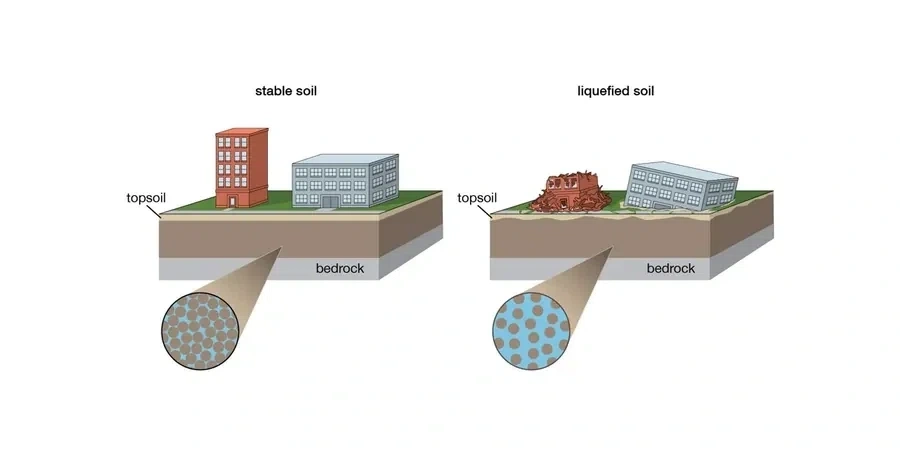
From initial site classification through to final design recommendations, our process delivers a clear, defensible seismic narrative. We synthesize field and laboratory data to present ground motion parameters, Site Class (per NBCC Table 4.1.8.4.A), and quantified risks from liquefaction, cyclic softening, and slope instability. Our deliverables provide geotechnical and structural engineers with the precise parameters needed for performance-based design of foundations, including deep pile or Improvement requirements. The value proposition is straightforward: by combining local geological understanding with advanced testing, we de-risk projects against the significant financial and life-safety consequences of seismic events, delivering a reliable subsurface model that forms the bedrock of resilient design in Langley.