The contrast between the dense glacial till underlying the Brookswood area and the soft, compressible silty clays found near the Nicomekl River floodplain defines the challenge of tunneling in Langley. A tunnel alignment that crosses from the upland residential zones into the valley bottom encounters a dramatic shift in soil behavior, transitioning from a relatively stiff material to a medium that exhibits significant time-dependent deformation. Our laboratory team has processed hundreds of undisturbed Shelby tube samples from these transition zones, and the data consistently show undrained shear strengths dropping below 30 kPa in the organic silts that characterize the lowlands. For projects where the alignment traverses these variable conditions, we integrate advanced triaxial testing with the CPT testing data to build a continuous profile of soil stiffness, which is essential for predicting settlement troughs and face stability during excavation.
Undrained shear strength alone is insufficient for soft soil tunnels; the stiffness degradation curve from triaxial testing dictates the real-world settlement prediction.
Method and coverage
Regional considerations
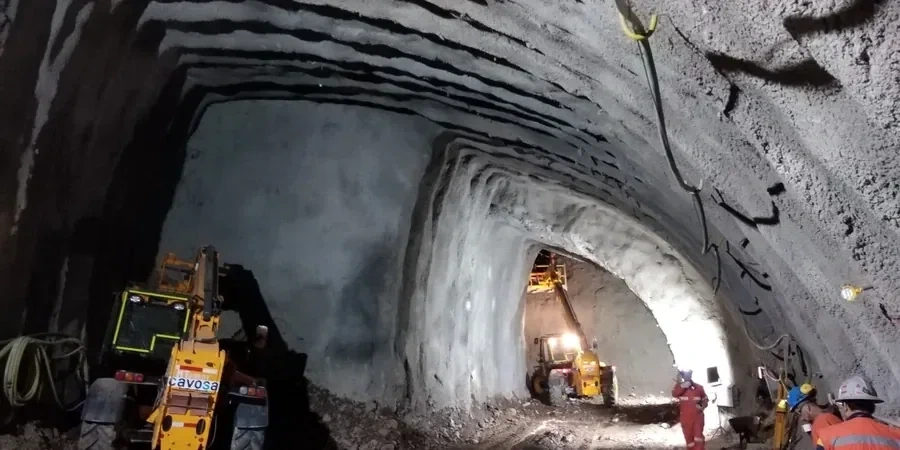
During a recent tunneling project near the Langley Regional Airport, the excavation face encountered a pocket of glaciolacustrine silt that had not been fully identified during the preliminary site investigation. The material displayed a liquidity index close to 1.2, meaning it was prone to flowing under minimal disturbance. Without a rapid re-evaluation of the pore pressure regime through consolidated anisotropic (CAU) triaxial tests, the contractor would have faced a high risk of face collapse and uncontrolled ground loss reaching the surface. This scenario underscores a reality specific to Langley's post-glacial geology: the stratigraphy can change from a competent lodgment till to a soft, normally consolidated clay within a single ring of the tunnel boring machine. The direct cost of a face instability event, measured in schedule delays, structural settlement, and grouting remediation, far outweighs the investment in a rigorous geotechnical analysis for soft soil tunnels before the cutterhead starts turning.
Standards that apply
ASTM D4767-19 (CU Triaxial), CSA + ASTM D2435 (Consolidation), CSA S6:19 (CHBDC Section 7), NCHRP Report 611 (Soft Ground Tunneling), FHWA-NHI-09-059 (Tunnel Manual)
Complementary services
Advanced Triaxial Testing
Consolidated-undrained and drained triaxial tests with local strain measurement to define the hardening soil parameters and undrained shear strength profile for the Fort Langley Formation.
Oedometer Consolidation
Incremental loading oedometer tests to determine Cc, Cr, and Cv, providing the input for time-dependent settlement analysis and excess pore pressure dissipation around the tunnel lining.
Soil Stiffness Profiling
Bender element and resonant column testing to establish the G/Gmax degradation curve, critical for serviceability limit state calculations in soft clay tunneling.
Pore Pressure Response Analysis
Skempton's pore pressure parameter (A) determination at failure to model undrained loading conditions during tunnel face advance through Langley's saturated silts.
Typical parameters
Top questions
What standard triaxial tests are required for a tunnel in Langley's soft clays?
We typically perform a suite of CIU (isotropically consolidated undrained) and CAU (anisotropically consolidated undrained) tests per ASTM D4767, with pore pressure measurement and a strain rate of 0.5% per hour or slower to ensure equalization. For tunnels where long-term drained behavior governs, CID tests at strain rates of 0.05% per hour are also recommended to capture the true effective stress path of the Fort Langley Formation clays.
How do you model the time-dependent settlement for a tunnel in compressible soil?
We perform multi-stage oedometer tests following CSA + ASTM D2435, applying load increments every 24 hours on undisturbed specimens. The derived coefficient of secondary compression (Cα) and the relationship between Cα and Cc are used to calibrate the soft soil creep model in PLAXIS, allowing the designer to predict settlements over a 50-year service life for a tunnel under the Langley Bypass.
What is the typical budget range for a soft soil tunnel geotechnical analysis in Langley?
A comprehensive laboratory testing program for soft soil tunnel design in Langley, including triaxial, oedometer, and index testing on multiple boreholes, generally falls between CA$5.050 and CA$25.000. The final cost depends on the number of Shelby tube samples, the required testing frequency along the alignment, and whether advanced tests like bender element or constant rate of strain consolidation are specified.