The 2020 National Building Code of Canada (NBCC) mandates a site-specific soil mechanics study for virtually all structural developments in Langley, and the reason becomes obvious once you examine the local stratigraphy. The municipality sits on a complex transition zone where glacial till, glaciomarine silts, and alluvial deposits from the Nicomekl and Salmon Rivers interleave within a few hundred meters. A standardized investigation that skips detailed index testing often misses the compressible clay lenses trapped beneath the Fort Langley formation, leading to differential settlement that manifests within the first two wet seasons. Our laboratory follows ASTM D2488 for soil description and ASTM D4318 for Atterberg limits, producing a factual dataset that Langley Township building officials recognize. For projects near the floodplain, we pair the soil mechanics study with a slope stability analysis because the Nicomekl River banks become sensitive after sustained rainfall, and the combined report satisfies both geotechnical and environmental planning requirements in a single submission.
Langley's glaciomarine silts lose over 60% of their undrained shear strength when remolded, making undisturbed sampling and careful lab handling non-negotiable for reliable settlement predictions.
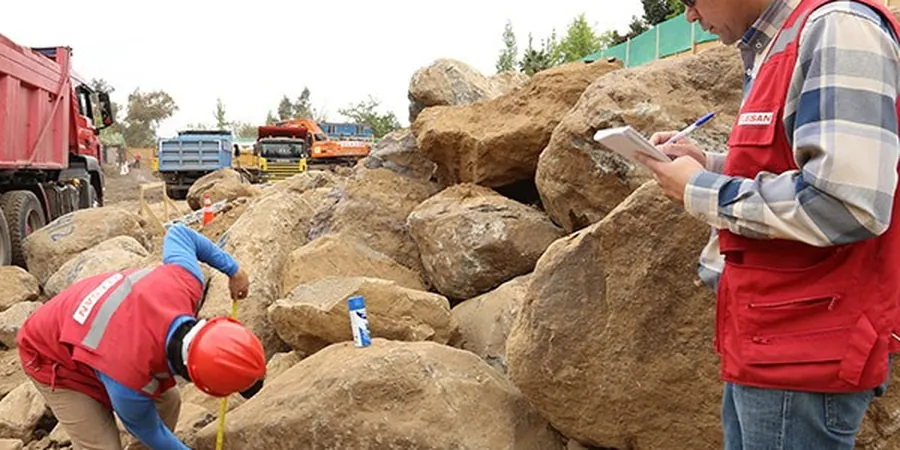
Method and coverage
Regional considerations
A recurring mistake we observe in Langley Township is designing shallow foundations using presumptive bearing values from the BC Building Code without confirming the presence of buried organic soils. The Salmon River uplands contain paleochannels filled with peat and fibrous organics that compress dramatically under load, but they rarely appear on surficial geology maps. One 200th Street commercial project required complete foundation redesign after post-construction settlement reached 120 mm in the first year, simply because the initial investigation stopped at two test pits without laboratory consolidation testing. A proper soil mechanics study catches these compressible lenses early through a combination of test pits for visual logging and undisturbed Shelby tube sampling for oedometer testing. The cost of the lab program is marginal compared to the liability of underpinning a settled structure, especially in areas east of 208 Street where the clay thickness increases significantly toward the Langley-Surrey border.
Standards that apply
NBCC 2020 Division B Part 4 – Structural Design (Geotechnical Sections), CSA A23.3:19 – Design of Concrete Structures (foundation provisions), ASTM D4767-11 – Consolidated Undrained Triaxial Compression Test for Cohesive Soils, CSA + ASTM D2435/D2435M-11 – One-Dimensional Consolidation Properties of Soils
Complementary services
Laboratory Index and Strength Testing
Complete physical characterization including grain size distribution (CSA + ASTM D422), Atterberg limits, moisture content, and unit weight. Shear strength via direct shear or triaxial compression for undisturbed samples extracted from Langley's glacial till and glaciomarine silt formations.
Consolidation and Settlement Analysis
One-dimensional consolidation testing (oedometer) to determine compression index, recompression index, and coefficient of consolidation. We calculate total and differential settlement magnitudes under proposed footing loads, accounting for the secondary compression that dominates in Langley's organic silts and sensitive clays.
Bearing Capacity and Foundation Recommendations
Ultimate and allowable bearing capacity calculations using limit equilibrium methods and numerical analysis calibrated to site-specific shear strength parameters. Deliverables include allowable bearing pressure tables, anticipated settlement curves, and excavation recommendations formatted for Township of Langley permit applications.
Typical parameters
Top questions
What is the typical cost range for a soil mechanics study in Langley for a single-family home lot?
For a standard single-family residential lot in Langley Township, a complete soil mechanics study generally falls between CA$4,630 and CA$6,970. The final amount depends on access conditions, the number of test pits or boreholes required, and the laboratory testing program. Sites near the Nicomekl floodplain or with known organic deposits tend to require additional consolidation testing, which places the project at the upper end of that range.
How long does the laboratory testing phase take after field sampling in Langley?
Standard index testing (grain size, Atterberg limits, moisture content) takes 5 to 7 business days. Consolidation testing adds approximately 10 to 14 days because each load increment requires full primary consolidation, which in Langley's fine-grained silts can extend beyond 24 hours per increment. Triaxial testing runs concurrently and typically finishes within 10 working days.
Does the Township of Langley require a soil mechanics study for an addition to an existing house?
Yes, the Township of Langley building department requires a geotechnical report for any structural addition that increases the foundation load. Even a single-storey extension changes the bearing pressure distribution and can trigger differential settlement if the existing footing bears on undisturbed glacial till while the new footing sits on backfill. A targeted soil mechanics study with two test pits and laboratory index testing is the standard approach for addition permits.
What soil parameters are most critical for Langley's typical glaciomarine silts?
Undrained shear strength and sensitivity are the two most critical parameters because Langley's glaciomarine silts exhibit strain-softening behavior when disturbed. We also measure preconsolidation pressure via oedometer testing to determine whether the soil is normally consolidated or overconsolidated, which controls the settlement regime. The compression index and coefficient of consolidation complete the dataset needed for reliable long-term settlement predictions.