In Langley, where the landscape transitions from upland glacial till to the low-lying alluvial plains of the Fraser Valley, understanding ground permeability is not just a technical checkbox—it’s a fundamental requirement. The BC Building Code and NBCC 2020 reference ASTM standards for in-situ hydraulic conductivity assessments, and for good reason: a foundation’s long-term performance depends heavily on how water moves through the surrounding soil. Whether you’re developing a multi-family site in Willoughby or excavating for stormwater infiltration galleries near the Salmon River, a field permeability test with the Lefranc method provides localized data that lab tests simply cannot replicate. When rock mass permeability is the question—common in the bedrock outcrops along the southern edges of the Township—the Lugeon test becomes the definitive procedure, delivering packer-isolated measurements across discrete intervals of the borehole.
A single Lugeon test in fractured granodiorite often reveals more about a site’s hydrogeology than a dozen laboratory permeability tests on intact core samples.
Method and coverage
Regional considerations
A significant portion of northern Langley sits over the Abbotsford-Sumas aquifer, a major groundwater resource where the water table can be encountered within 2 to 5 meters of the surface during the wet winter months. Underestimating permeability here creates two immediate problems: excessive water inflow during excavation, and the long-term buoyancy forces acting on buried structures. A Lefranc test conducted in a properly flushed and developed boring provides the k-value needed to size pumps, design underdrain systems, and verify that a groundwater control plan will actually work when the rain arrives in November. In the glacial till that blankets much of the upland areas, the matrix itself is often silty and dense, yielding low permeability—but isolated sand lenses can create preferential flow paths that surprise contractors. Intercepting one of these lenses without prior testing can turn a dry excavation into a muddy setback within hours.
Standards that apply
ASTM D6391-11 (Standard Test Method for Field Measurement of Hydraulic Conductivity), ASTM D4630-19 (Standard Test Method for Determining Transmissivity and Storage Coefficient), ISRM Suggested Method for Lugeon Test (Rock Mass Characterization), NBCC 2020, Part 4 (Structural Design) referencing groundwater control requirements
Complementary services
Lefranc Permeability Testing in Soil
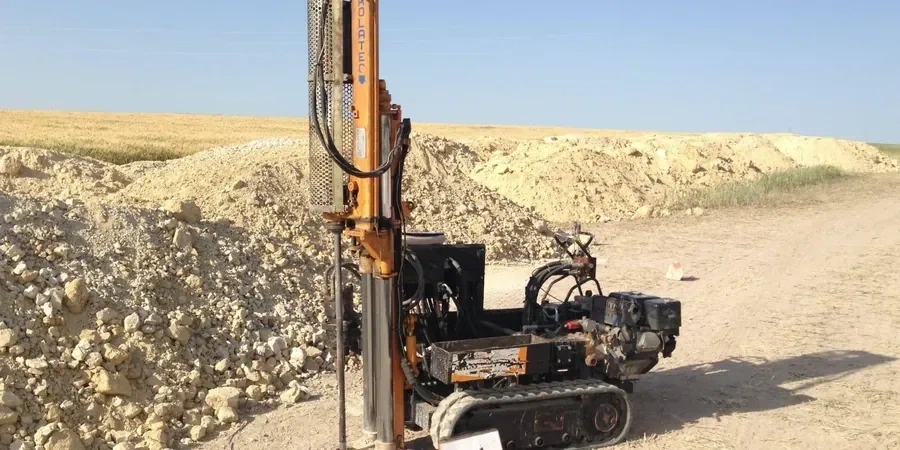
Variable-head and constant-head Lefranc tests conducted in boreholes advanced through the glacial and alluvial deposits typical of Langley. Each test includes pre-test development, multiple head measurements, and correction for filter pack effects.
Lugeon Packer Testing in Bedrock
Multi-stage Lugeon tests with pneumatic packers to isolate specific fracture zones. We run five pressure steps per stage to characterize flow regime—laminar, turbulent, dilation, or washout—providing essential data for grouting design and deep excavation planning.
Infiltration Testing for Stormwater Management
Field-saturated hydraulic conductivity tests aligned with the BC Groundwater Protection Regulation and municipal stormwater bylaws. We deliver the permeability values engineers need to size infiltration trenches, rain gardens, and drywells across the Township of Langley.
Typical parameters
Top questions
What is the typical cost of a field permeability test in Langley?
For a single Lefranc or Lugeon test package in the Langley area, budget between CA$860 and CA$1,410 depending on depth, access conditions, and whether the borehole is drilled exclusively for testing or shared with an existing investigation. Mobilization, traffic control in urban Langley City, and reporting are additional line items we clarify during proposal stage.
How long does a Lefranc test take to complete on site?
A single Lefranc test at one depth interval typically requires 45 to 90 minutes of active field time, assuming the boring is already advanced and the filter zone is properly developed. We monitor water level recovery with pressure transducers, and the duration extends if the soil exhibits very low permeability, such as the dense till found in Brookswood.
When should I specify a Lugeon test instead of a Lefranc test?
Choose the Lugeon test whenever your project encounters bedrock within the depth of influence for excavations, tunnels, or dam foundations. The Lugeon method uses packers to isolate discrete intervals, so you get a permeability profile of the fracture network rather than a single bulk value from the overburden. In Langley’s southern reaches where granitic bedrock is shallow, this distinction drives dewatering and grouting decisions.
Can field permeability data be used directly in a dewatering plan?
Absolutely. The k-value from a properly executed Lefranc or Lugeon test feeds directly into analytical and numerical groundwater models that predict inflow rates, required pump capacities, and the radius of influence for wellpoint systems. For complex sites near Langley’s creeks and the Nicomekl floodplain, we recommend pairing the permeability data with a deep excavation monitoring plan to validate the model during construction.